Swimwear on underneath, quick-dry shorts over the top, a long-sleeve rash guard, one light layer for the dark pickup, a hat that ties on, and reef-safe sunscreen. A Phi Phi day out of Phuket runs about ten hours door to door, with two snorkel stops and most of it under open sky. That is the short version of what to wear for Phi Phi Island tour days; the rest of this guide walks the day stage by stage and says what you want on at each one.
The short answer, before the detail
Most people pack for the beach and forget the boat. The honest answer to what to wear for Phi Phi Island tour days is that you are dressing for four different conditions inside one day: a cool, dark road transfer, an hour at speed on open water, several hours of direct equatorial sun, and two spells in the sea. One outfit will not cover all four, but four light pieces will.
Those pieces are a swimsuit worn from the hotel, quick-dry shorts, a long-sleeve rash guard or light sun shirt, and a thin layer you can take off and stuff in a bag by eight in the morning. Everything else is optional. Nothing on that list needs to be new, technical or expensive.
The 5am pickup is the cold part, and hardly anyone packs for it
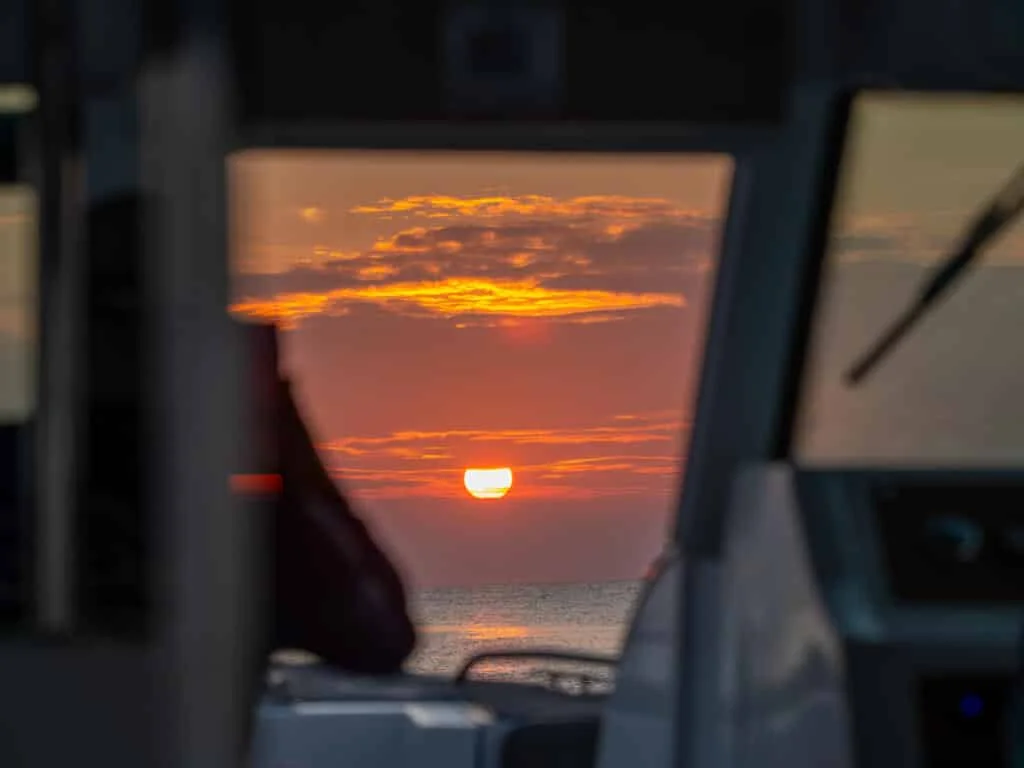
The Two Sea Tour Phi Phi day leaves Boat Lagoon Marina at 6am, which puts hotel pickup at roughly 5am depending on where you are staying. You will be standing in a hotel driveway in the dark, then sitting in an air-conditioned minibus, then stepping onto a speedboat that runs about an hour and ten minutes to the islands with the sunrise happening at sea.
Moving water at speed before dawn is genuinely cool, and wet skin makes it cooler. A thin long-sleeve layer — a light hoodie, a travel shirt, even a sarong across the shoulders — solves the whole first two hours. By the time you reach Maya Bay it is off and stays off, so it does not need to be anything more than that.
Eight hours of open sun changes what a shirt is for
On a normal beach day a T-shirt is modesty. On a boat day it is equipment. You are on the water from six in the morning until early afternoon, there is reflected glare off the sea as well as direct sun overhead, and the shaded part of the boat does not cover the bow or the swim platform where most people want to sit.
If there is one answer to what to wear for Phi Phi Island tour days that changes how the day feels, it is this: a long-sleeve rash guard does more work than any other single item here. It stays useful wet, it covers the two places that burn first — the tops of the shoulders and the back of the neck — and it means you are not reapplying sunscreen to your whole back every hour with salty hands. A loose linen shirt does nearly as well on deck, though it is less comfortable in the water.
Sunglasses matter more than people expect, and a strap matters more than the sunglasses. At speed, anything loose on your head goes over the side. Hats want a chin cord or they want to live in your bag during the transits.
The sunscreen rule inside a Thai marine park
This one is a regulation, not a preference. In 2021 Thailand's Department of National Parks, Wildlife and Plant Conservation prohibited sunscreens containing oxybenzone, octinoxate, 4-methylbenzylidene camphor or butylparaben in all of the country's marine national parks, on the grounds that those compounds damage coral. The Phi Phi islands sit inside that protected area, and both snorkel stops on this tour are over hard coral.
Check the ingredient list on the bottle you already own before you travel. Mineral formulas based on zinc oxide or titanium dioxide are the straightforward alternative and are sold widely in Phuket. A rash guard also reduces how much sunscreen you need in the first place, which is the quieter argument for wearing one.

Swimwear you can sit in for nine hours
Wear it from the hotel. There is no changing room on a speedboat, and with a 5am pickup nobody wants to be negotiating a towel on a moving deck at seven in the morning. Put the swimsuit on first thing, pull clothes over it, and the question never comes up.
The practical test is whether you would be comfortable sitting in it, damp, for several hours between stops. Ties that dig in, anything that needs adjusting after every swim, and brand-new white fabric all tend to be regretted by mid-morning. Darker colours and a secure fit age better across a day that includes Pileh Lagoon, two snorkel stops and a final beach.
Pack one completely dry set of clothes in a sealed bag for the journey home. Lunch is back at Boat Lagoon Marina at the end of the day, and sitting down to eat in dry clothes is a noticeably better finish than sitting down in wet ones.
Shoes, sand and a wet deck
Most of this day is barefoot. The deck is wet, the beach landings are into shallow water, and shoes spend the majority of the trip in a pile near the bow. Simple flip-flops or slide sandals you can kick off are enough, and they are what nearly everyone on board ends up wearing.
Water shoes are worth it if you are unsure on your feet getting in and out of the sea, or if you would rather not stand on anything unseen in shallow water. They are not required, and the crew provides fins for both snorkel stops. What does not work is anything with laces, anything suede, and anything you would mind losing.
What you are wearing at each stop
The itinerary below is the shape of the Two Sea Tour Phi Phi day as it actually runs. Times are approximate and the crew adjusts the order for sea conditions, but the clothing logic holds either way.
| Stage of the day |
Roughly when |
What you want on |
| Hotel pickup |
About 5am |
Swimwear underneath, shorts, light long-sleeve layer |
| Departure from Boat Lagoon Marina |
6am |
Layer still on, hat in the bag |
| Transit to the islands |
About 1 hour 10 minutes |
Layer on, sunglasses on a strap |
| Maya Bay, ahead of the day boats |
From about 7:15am |
Layer off, rash guard on, sunscreen applied |
| Pileh Lagoon |
About 60 minutes |
Swimwear, rash guard in the water |
| First snorkel stop |
About 60 minutes |
Rash guard, nothing loose on your head |
| Viking Cave and Monkey Beach, from the water |
About 30 minutes |
Dry top back on, hat and sunglasses |
| Second snorkel stop |
About 45 minutes |
Rash guard again, or sit this one out |
| Bamboo Island or Koh Rang Yai |
About 60 minutes |
Swimwear and a cover-up |
| Lunch back at the marina |
Early afternoon |
The dry change of clothes |
Two details in that table are worth drawing out. The first is that the sunrise happens during the transit rather than at Maya Bay, so the layer earns its place before anything photogenic does. The second is that the Viking Cave and Monkey Beach stop is a slow pass from the water rather than a landing — the macaques are unpredictable around people and the crew does not put guests ashore there — so it is a dry, sunny half hour in the middle of two wet ones.

How to lay it out the night before
- Set your swimwear on top of the pile so it goes on first in the morning.
- Fold one long-sleeve rash guard or light sun shirt next to it.
- Add quick-dry shorts, and nothing made of denim.
- Put out one thin layer for the dark drive and the transit.
- Seal a dry T-shirt and shorts in a bag for the ride home.
- Check your sunscreen against the banned ingredients above, and replace it if it fails.
- Clip a strap to your sunglasses and a cord to your hat.
That is the whole preparation. Towels, snorkel gear, masks, fins, life jackets and floating aids are on the boat, so none of it needs to come out of your luggage.
What to leave at the hotel
Jeans and anything heavy cotton, because it will not dry. Jewellery, because sunscreen, salt water and small boats are an unkind combination. Anything electronic you are not prepared to see get wet, unless it is inside a sealed case — a waterproof phone pouch is the one accessory nearly everyone wishes they had brought by the time the boat reaches Pileh Lagoon.
Large hard-shell bags are also worth leaving behind. Storage on a speedboat carrying a maximum of eighteen adults is a shared space near the bow, and a soft bag that squashes is easier for everyone.
High season changes the answer slightly
What to wear for Phi Phi Island tour days shifts a little with the season. Phuket's high season runs from November to April, and it starts now. The northeast monsoon brings calmer water on the Andaman side, which means less spray across the deck on the transit and more consistent visibility at the snorkel stops. Interest in the islands tracks that shift closely — Google Trends shows searches for Phi Phi in Thailand at their highest level in three months as of the start of November 2026.
For clothing, calmer seas change two things. You are less likely to arrive at Maya Bay damp from spray, so the thin layer stays dry and stays useful for longer. And the early mornings through December and January are the coolest of the year in Phuket, which is the one time of year that the layer is not optional. What to wear for Phi Phi Island tour days in January is the same list as in June, with the layer moved to the top of it.
Before you book the day
If you are still deciding between operators rather than deciding what to pack, our guide to
choosing a boat trip to Phi Phi from Phuket covers that comparison, and
what there is to do once you are on the islands covers the rest of the day. If you are planning to stay overnight rather than return the same afternoon,
where to stay on Phi Phi is the one to read, and
which island is which explains the geography the itinerary assumes.
Two Sea Tour runs the
Phi Phi Island Speedboat Tour daily from Boat Lagoon Marina with a maximum of eighteen adults on board and an average of fourteen, which is the reason the 6am departure works — a smaller group loads and moves faster than a large one. Snorkelling gear, life jackets and hotel pickup within the Phuket zone are included, and cancellation is free up to twenty-four hours before departure. You can see the
full list of shared departures, or
ask us anything before you commit. The
Phi Phi Islands entry on Wikipedia is a reasonable primer on the archipelago itself.
Questions about a specific departure date, or about what the sea is doing that week: +66 81 787 7702, or WhatsApp +66 62 979 9974.