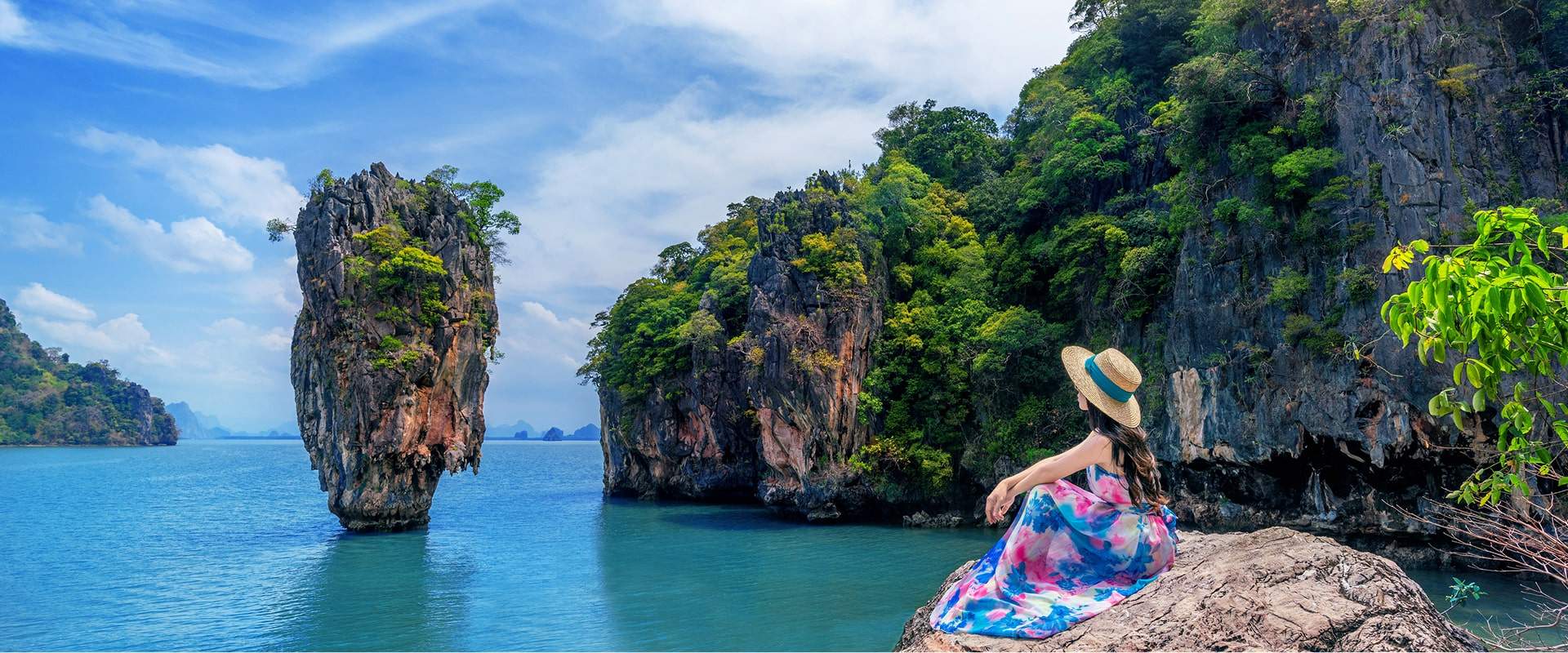


Thailand bans four sunscreen chemicals in its marine national parks: oxybenzone, octinoxate, 4-methylbenzylidene camphor (4-MBC) and butylparaben. The ban was announced by the Department of National Parks, Wildlife and Plant Conservation in August 2021, and breaking it can mean a fine of up to 100,000 baht. Phang Nga Bay is a marine national park (Ao Phang Nga), so the rule applies there too. For your day on the bay, pack a mineral sunscreen made with zinc oxide or titanium dioxide and read the ingredients list, not the label on the front.
Sunscreen is one part of it. The same parks also ban foam boxes and most single-use plastic, ask you not to touch or feed wildlife, and now sell entry tickets electronically. None of it is hard to follow. It just helps to know before you leave the hotel.
This guide covers what the rules actually say, what to pack, and how a quiet day on Phang Nga Bay can leave the water as calm as you found it.
Thailand's Marine Park Rules at a Glance
| Rule | What it means for you |
|---|---|
| Banned sunscreen chemicals | Oxybenzone (BP-3), octinoxate, 4-MBC, butylparaben |
| Where it applies | Thailand's marine national parks, including Ao Phang Nga and Mu Ko Phi Phi |
| Maximum fine | Up to 100,000 baht under the National Park Act 2019 |
| Single-use plastic | Foam boxes, thin plastic bags, plastic cups, straws and cutlery are banned in national parks |
| Wildlife | No touching, feeding, chasing or taking anything home |
| Entry tickets | E-tickets only at six Andaman marine parks since 15 October 2025, including Ao Phang Nga |
Why Thailand Banned Some Sunscreens
The Department of National Parks (DNP) says the four chemicals damage coral reefs, kill coral larvae, interfere with coral reproduction and add to coral bleaching. A sunscreen washes off a swimmer within minutes. Multiply that by thousands of swimmers a day in one bay and the amount in the water is no longer small.
The ban was made under Section 20 of the National Park Act 2019, which lets the department set rules to protect a park's natural resources. It covers every marine national park in Thailand, not only the famous reef sites. Using a banned product inside a park can bring a fine of up to 100,000 baht.
You are unlikely to have your bag searched. That's not really the point. The rule exists because the parks are under real pressure, and following it is the simplest thing a visitor can do to help.
"But Phang Nga Bay Isn't a Reef Bay"
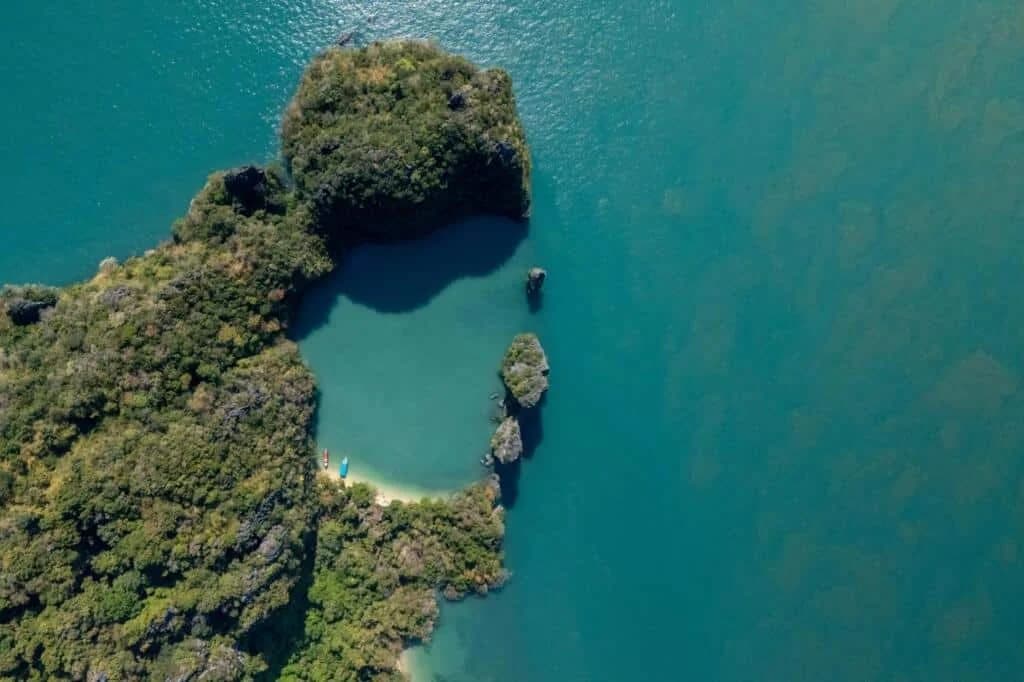
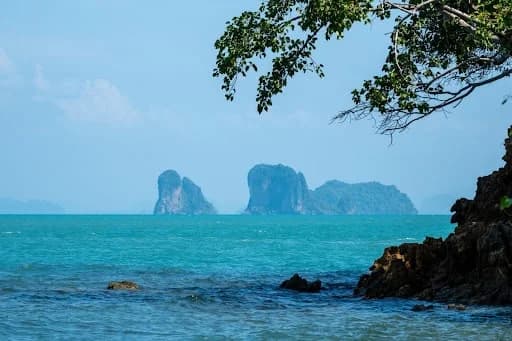
That's true. Phang Nga Bay is a bay of limestone towers, sea caves and mangrove channels. The water is green and soft, coloured by the rivers and mangroves that feed it, and it is not where you come for coral.
The rule still applies, for two reasons. First, Ao Phang Nga is a marine national park, and the ban covers all of them. Second, the bay is not empty water. Mangrove roots, seagrass, shellfish, crabs and young fish all live in the shallows you swim and paddle through. Sunscreen washed off at a beach stop doesn't stay at the beach.
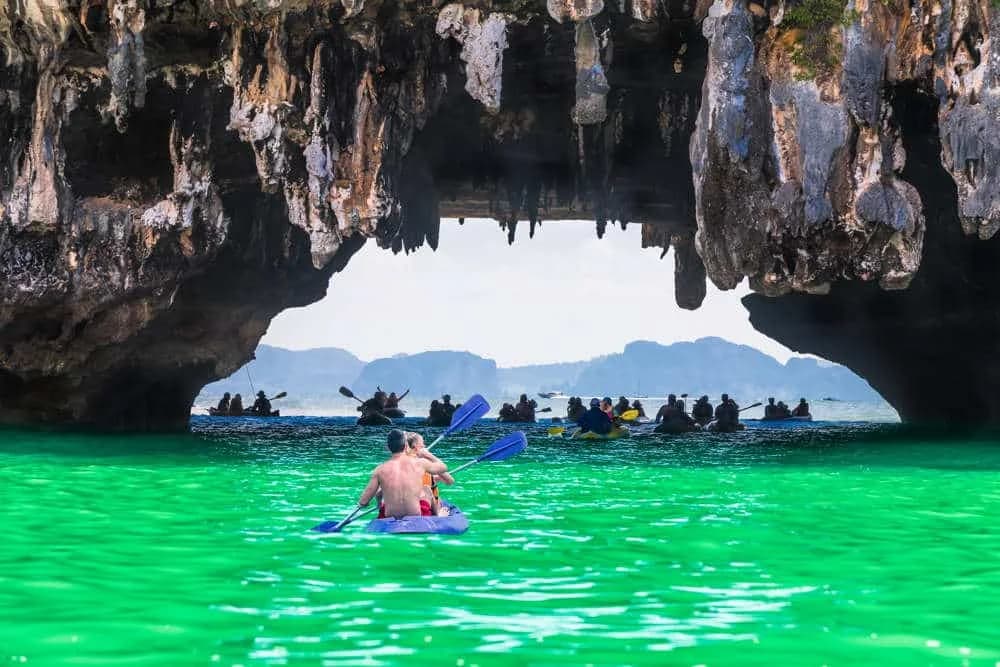
On a Phang Nga Bay day you will kayak through the caves into the hongs (the hidden lagoons inside the islands) and swim at a beach stop or two. Every one of those moments puts you in the water. If you want to know more about the hongs before you go, read our guide to the Phang Nga Bay kayaking tour, hidden hongs and sea caves.
How to Choose a Reef-Safe Sunscreen
"Reef safe" is a marketing phrase. No agency in Thailand checks it, so a bottle can say it on the front and still list a banned chemical on the back. Read the ingredients.
Look for:
- Zinc oxide or titanium dioxide as the active ingredient (a mineral sunscreen)
- "Non-nano" on the label, where you can find it
- A lotion or cream rather than a spray. Sprays drift onto the sand and the water
Avoid anything listing:
- Oxybenzone (also written benzophenone-3 or BP-3)
- Octinoxate (also written ethylhexyl methoxycinnamate)
- 4-methylbenzylidene camphor (4-MBC)
- Butylparaben
| On the label | Okay in a marine park? |
|---|---|
| Zinc oxide | Yes |
| Titanium dioxide | Yes |
| Oxybenzone / benzophenone-3 | No |
| Octinoxate / ethylhexyl methoxycinnamate | No |
| 4-MBC | No |
| Butylparaben | No |
Mineral sunscreens are easy to find in Phuket pharmacies and larger supermarkets. Bringing one from home is easier still.
Use less, cover more. The best protection for you and the bay is clothing. A long-sleeve rash guard, a hat that ties on and a light shirt for the boat mean you only need sunscreen on your face, hands and feet. Put it on at the hotel, at least 15 minutes before you get in the water, so it has time to settle on your skin rather than in the sea.
The Single-Use Plastic Ban
Thailand's national parks ban foam food boxes and most single-use plastic. A notification under the National Park Act 2019 lists plastic bags thinner than 36 microns, plastic food containers, single-use plastic cups, plastic straws and plastic cutlery.
What that means on the day:
- Bring a refillable water bottle rather than a pack of small plastic ones
- Leave the takeaway breakfast box at the hotel. A foam or plastic box shouldn't come into the park
- Carry a small cloth or dry bag for your phone and snacks instead of a plastic bag
- Take every wrapper home. If there's no bin, it comes back to the boat with you
The bay's beaches are small. A little litter is very visible, and it doesn't leave by itself.
Wildlife: Look, Don't Touch
Everything living inside a national park is protected by the park. On Phang Nga Bay that includes the long-tailed macaques on the islands, monitor lizards, the birds of the mangroves, crabs, mudskippers and the shells on the sand.
- Don't feed the monkeys. Feeding makes them bolder around people and harms their health. Park officials have tracked down and fined visitors for feeding monkeys on Phi Phi
- Don't touch, chase or pick up anything alive, in or out of the water
- Don't take shells, coral, sand or stones home. They belong to the park
- Keep your voice low in the hongs. They are enclosed, the sound carries, and the birds notice
Under the National Park Act 2019, harming wildlife or damaging a park's natural resources can bring a fine of up to 500,000 baht, prison of up to five years, or both. Most visitors never come close. A quiet, hands-off day is all the rules ask for.
Marine Park E-Tickets
Since 15 October 2025, six Andaman marine parks have sold entry by e-ticket only, with no paper tickets and no cash at the gate. They are:
- Ao Phang Nga (Phang Nga Bay)
- Hat Noppharat Thara–Mu Ko Phi Phi (Phi Phi Islands)
- Than Bok Khorani (Krabi)
- Mu Ko Lanta (Krabi)
- Mu Ko Similan (Phang Nga)
- Mu Ko Surin (Phang Nga)
Fees for foreign visitors are set park by park, so check the current rate for the park you're visiting. If you are joining an organised day, ask your operator whether the park fee is included and who buys the ticket. On a Two Sea Tour day, ask us when you book and we'll tell you exactly what's covered for your date.
Your Eco Checklist for a Phang Nga Bay Day
Pack the night before:
- Mineral sunscreen (zinc oxide or titanium dioxide), no banned chemicals on the label
- Long-sleeve rash guard or light long-sleeve shirt
- A hat that ties on, and sunglasses with a strap
- Refillable water bottle
- Hotel towel
- Swimwear on underneath, quick-dry shorts over the top
- A copy of your passport (the original can stay at the hotel)
- Some cash or a card for anything not included
On the day:
- Sunscreen on at the hotel, not on the boat or in the water
- No foam boxes or single-use plastic into the park
- Hands off wildlife, shells and coral
- Quiet voices in the hongs
- Every wrapper back to the boat
How We Spend a Day on the Bay
We run Phang Nga Bay as a small-group speedboat day from Boat Lagoon Marina, with kayaking into the hongs, a stop at James Bond Island, and time to swim at quieter beaches.
Before every trip we check the tides, the swell and the weather. That decides which caves we paddle and when, because the cave entrances to the hongs depend on the tide. Dry bags are provided for each group, so phones and passports stay dry without a plastic bag. Our guides speak English and Thai and know the bay well, so ask them anything about the islands and the wildlife you see.
We ask guests to bring their own sunscreen and towel, and we'd much rather it was a mineral one. If you're not sure about yours, bring it along and ask before you put it on.
You can see the full day on our Phang Nga Bay tour page. Heading to Phi Phi instead? The same sunscreen rule applies there, and our guide on what to wear for a Phi Phi Island tour day covers the rest.
A Slower Way to Leave the Bay
Phang Nga Bay has been here a long time. The cliffs, the caves and the still water inside the hongs don't need much from us. A better sunscreen, a bottle you refill, hands that stay off the wildlife. That's enough.
Two Sea Tour departs from 23 Boat Lagoon Marina, Soho Pool Club, Moo 2, Ko Kaeo, Ampur Mueang, Phuket 83000, Thailand. We're open 7 days a week, 05:00 to 20:00. Call or WhatsApp +66 81 787 7702, or email booking@twoseatour.com.
Sources: the sunscreen ban was reported by the Bangkok Post when the Department of National Parks announced it in August 2021. Background on the park itself is on Wikipedia's Ao Phang Nga National Park page.