A Phi Phi Island small group tour is defined by one number: the maximum passenger count the operator will put in writing. Almost everything else follows from it — how long you get at each stop, whether you wait for snorkel gear, how early you stand on the first beach. This guide covers what to ask before booking, what should already be inside the fare, and what high season changes.
What “Small Group” Actually Means on the Water
The phrase is not regulated. Any operator may print it, and two boats advertising the same words can carry very different numbers of people. The only comparison that holds is the written maximum, so ask for the cap rather than the average — an average of fourteen on a boat that sometimes carries thirty-five is a different day from an average of fourteen on a boat that never carries more than eighteen.
Two Sea Tour publishes a hard cap of 18 adults, 19 in total when children are aboard, with an average of 14. Once 18 adults are booked, that date closes rather than taking a nineteenth. That is the figure to compare against, and it is the single most useful question you can put to any operator before you pay.
There is a point past which a shared boat is the wrong answer altogether. If you are travelling as a group of eight or more, or with small children who need the day shaped around them, taking the whole boat usually costs less per head than it sounds and removes the question of who else is aboard. Two Sea Tour's
private charters cover the same water on your own schedule. For everyone else, a shared departure with a firm cap gives most of the same room at a fraction of the outlay.

Seven Questions to Ask Before You Book
Each of these can be answered by a reputable operator in one line. If an answer arrives vague, that is itself an answer.
- Ask for the maximum passenger number, not the average, and ask whether it is a cap or a target.
- Ask what the quoted fare already covers — transfers, national park entry, gear, food — and what is collected later.
- Ask what time the boat leaves the marina, not what time you are collected from your hotel.
- Ask whether the crew are employed and trained by the operator or hired per trip.
- Ask how many stops the day contains and roughly how long you get at each one.
- Ask what happens when the sea closes a stop, and whether the itinerary is decided on the day.
- Ask how cancellation works in both directions — yours and theirs.
What Should Already Be in the Price
Day-trip fares from Phuket look similar in a search listing and separate sharply once you read what sits inside them. Some operators quote a low headline figure and collect national park entry, gear hire or lunch on the day; others fold everything in. Neither is dishonest, but only one lets you compare two tours side by side.
On the Two Sea Tour join-in departures the published fare covers the shared hotel transfer both ways, a light breakfast, national park entry fees, mask, snorkel and fins, floating aids and life jackets for every guest, drinks and fruit aboard, and a buffet lunch back at the marina. Alcohol and tips sit outside it. Fares themselves move with the season, so read the live “from” figure on the tour page you are booking rather than trusting a number quoted anywhere else, including this page.
National park entry is the item most often left out of a headline figure, and it is not small. Every visitor entering a Thai marine national park pays it, so a fare that excludes it is not really the fare. Ask whether it is collected at the pier in cash, and in which currency. The same applies to booking fees and tax added at checkout — Two Sea Tour absorbed both in 2025, so the figure shown on the page is the figure charged, but that is a question worth putting to anyone.
Small Group and Larger Boat: What Changes Through the Day
Group size is not an abstract preference. It shows up at specific moments, and those moments are where a day either works or drags.
| Point in the day |
Smaller manifest |
Larger manifest |
| Hotel pickup |
Fewer collection stops before the marina |
A longer loop while the vehicle fills |
| Boarding and briefing |
One briefing everyone can hear |
Briefing repeated, or missed at the back |
| First beach of the day |
Everyone ashore at once |
Staggered landings, shorter time each |
| Snorkel stops |
Gear already assigned per guest |
Gear shared or queued for |
| Questions to the crew |
Answered individually |
Answered over a microphone |
| Leaving each stop |
Headcount takes a minute |
Headcount takes considerably longer |
What a Smaller Group Changes at the Snorkel Stops and on the Beaches
This is where the difference is easiest to feel. On a Phi Phi Island small group tour with gear allocated to each guest, the stop begins when the boat stops. Two Sea Tour carries mask, snorkel and fins for everyone aboard, plus floating aids, and picks two reefs on the day according to visibility and current rather than running a fixed pair regardless of conditions. The two are deliberately contrasted with each other, so you are not snorkelling the same seabed twice.
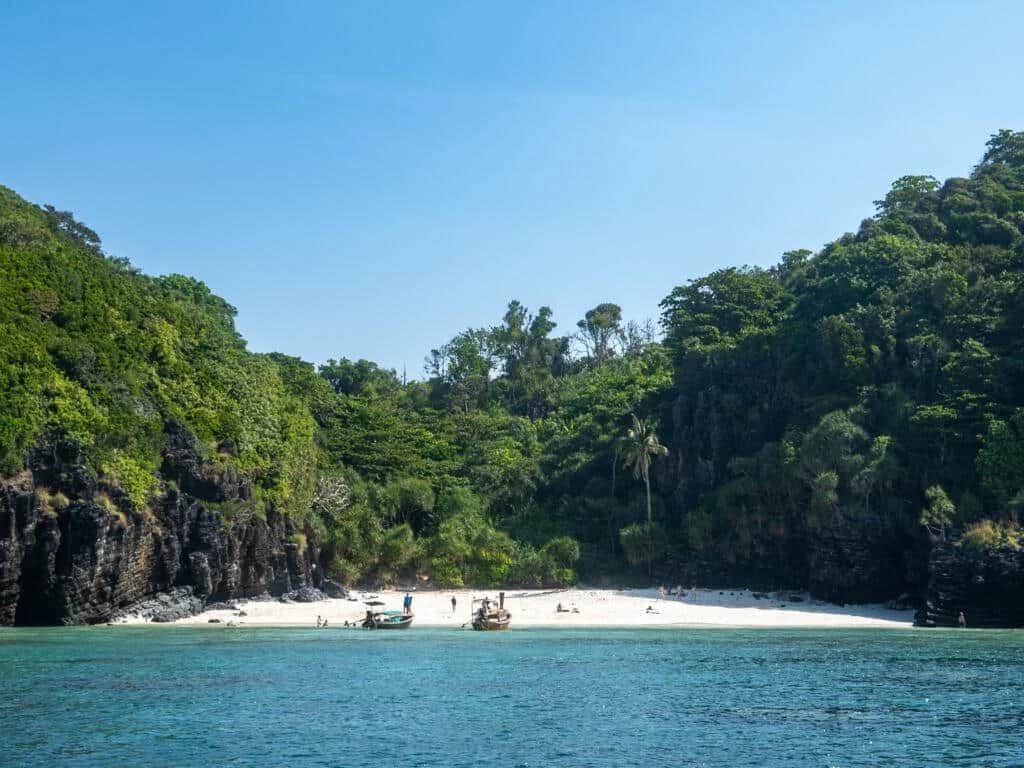
On the beaches, fewer people ashore means less of the sand occupied and less of the stop spent regrouping. Maya Bay is reached around 7:15am on the sunrise departure and the boat pulls away by about 8:30am, ahead of the crowds rather than free of them — no operator can promise an empty beach in high season, and one that does is overpromising.
One rule applies whoever you book with. In 2021 Thailand's Department of National Parks, Wildlife and Plant Conservation prohibited sunscreens containing oxybenzone, octinoxate, 4-methylbenzylidene camphor or butylparaben in the country's marine national parks. Check the back of the bottle before you pack it; our
guide to reef-safe sunscreen and marine park rules goes through the detail.

Departure Time Is a Choice, Not a Detail
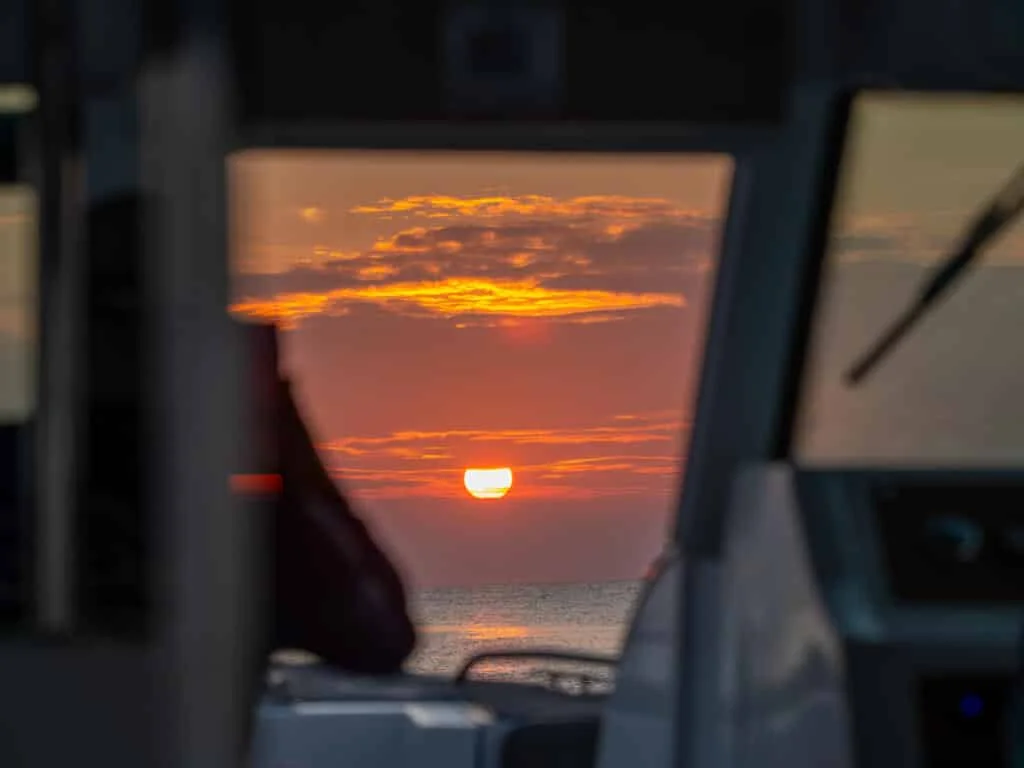
Arrival windows at the headline stops differ by operator, and the gap between an early boat and a mid-morning one is the difference between walking a quiet beach and joining a queue for the same photograph. Two Sea Tour leaves Boat Lagoon Marina at 6am; sunrise happens at sea during the transit of roughly an hour and ten minutes, and the first landing follows shortly after.
An early start is not the right answer for everyone. If a 5am alarm would spoil the day, the
afternoon Phi Phi departure covers similar water with the light going the other way. If you would rather compare the shape of a shorter day against a full one first, our
half-day and full-day comparison sets the two against each other, and the
hour-by-hour account of the sunrise day shows exactly how the eight hours are spent.
Booking Between November and April
Phuket's high season opened on 1 November and runs through April, which changes two practical things about choosing a Phi Phi Island small group tour. The first is availability: a boat with a genuine cap closes dates, so the gap between deciding and booking matters more now than it does in June. The second is choice — the
join-in departures currently list four options, and the afternoon Phi Phi run operates from November to April only, so it is in service at the moment and will not be in May.
Sea conditions are calmer across these months, which is why the season exists, but no operator should guarantee them. Conditions are assessed on the morning, and a well-run day trip substitutes a stop rather than forcing one.
Reading Reviews for the Things That Matter
Photographs on a tour page show the islands, which look much the same whoever takes you there. Reviews are where the day itself is described, so read them for the parts a photograph cannot carry: whether the briefing was clear, whether the boat left on time, how the crew handled a guest who was uncomfortable in open water, and what happened on a day when the weather turned.
Three habits make reviews more useful. Read the recent ones first, because crews and boats change and a glowing account from four years ago describes a different operation. Read the middling scores rather than only the top and bottom, since those tend to be the most specific. And treat any rating or review count displayed on an operator's own website as that operator's own claim — check it on the review platform itself, where the date and the wording are visible.
What you are looking for is consistency on logistics, not superlatives about scenery. An operator who is repeatedly described as organised, punctual and calm is telling you something that a list of island names cannot.
Cancellation, Weather and the Small Print
Read the cancellation terms in both directions before you book any Phi Phi Island small group tour. Two Sea Tour's
cancellation policy allows a free cancellation up to 24 hours before departure; inside that window the full fare applies, unless the tour is cancelled for sea-condition safety, in which case the deposit is returned in full.
Two further checks are worth a minute. Confirm the operator's TAT licence number — Two Sea Tour runs under 34/02111 — and confirm that life jackets and floating aids are carried for every guest aboard rather than on request. Neither question is awkward to ask, and both tell you something about how the boat is run.
Choosing the Day That Suits You
The right Phi Phi Island small group tour is the one whose written cap, start time and inclusions match the day you actually want. Ask the seven questions above of any operator, including this one, and compare the answers rather than the adjectives. If it helps to see which island is which before deciding, our
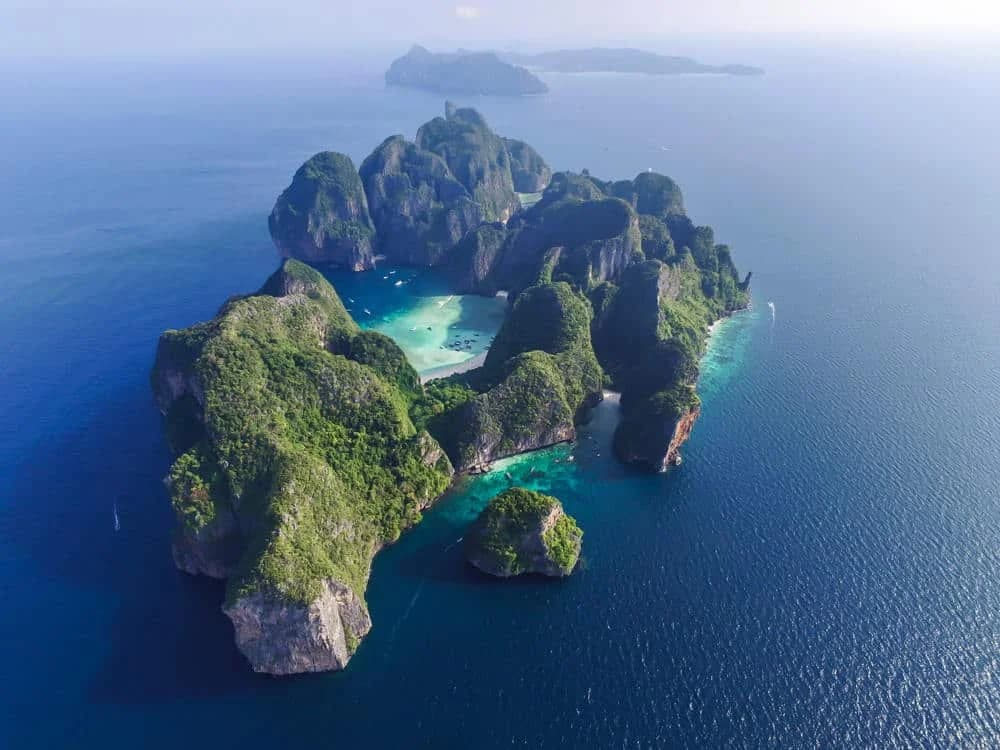
guide to the Phi Phi islands covers the geography, and
Wikipedia's entry on the Phi Phi Islands gives the wider background.
When you are ready, the
Phi Phi Island small-group boat tour page carries the full itinerary, the live availability and the current fare. Questions are welcome first: +66 81 787 7702, or WhatsApp +66 62 979 9974.