Whale sharks do pass through the waters around Phi Phi, but not often, and never to order. The most recent confirmed sighting came on 14 March 2026, when park rangers on patrol from Maya Bay found a whale shark of around 3 to 5 metres swimming near Koh Bida Nai and Koh Bida Nok, inside Hat Noppharat Thara–Mu Ko Phi Phi National Park. Park officials called it a rare sighting, told boat operators and visitors straight away, and asked everyone to keep a safe distance, keep the noise down and not try to interact with it.
That's the honest picture of whale sharks around Phuket. They turn up now and then, mostly in the drier months from about February to April, and almost always somewhere you weren't expecting. Nobody running day trips from Phuket can promise you one, and you should be wary of anyone who does.
This guide covers when whale sharks tend to appear in the Andaman Sea, how to tell one apart from the reef sharks you're far more likely to see at Phi Phi, and what to do, in the water and on the boat, on the lucky day one swims past.

Whale Sharks Near Phuket at a Glance
| Question |
Short answer |
| Are there whale sharks near Phi Phi? |
Occasionally. The last confirmed sighting was 14 March 2026, near Koh Bida Nai and Koh Bida Nok |
| When do they appear? |
Most Andaman sightings fall roughly between February and April |
| Can a day trip promise one? |
No. Sightings are luck, not an itinerary stop |
| Are they dangerous? |
No. Whale sharks are filter feeders that eat plankton and small fish |
| Are they protected? |
Yes. Thailand lists the whale shark as a "reserved" wild animal, its highest level of wildlife protection |
| What should you do if you see one? |
Keep your distance, stay quiet, don't touch, chase or block it, and follow the crew |
The March 2026 Sighting at Koh Bida
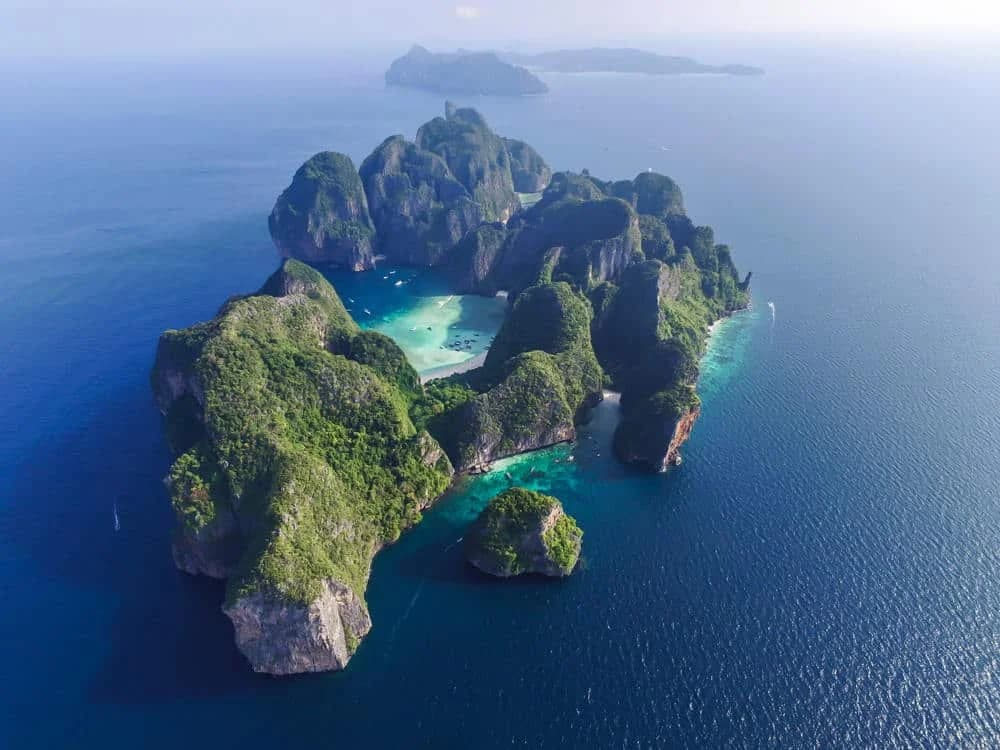
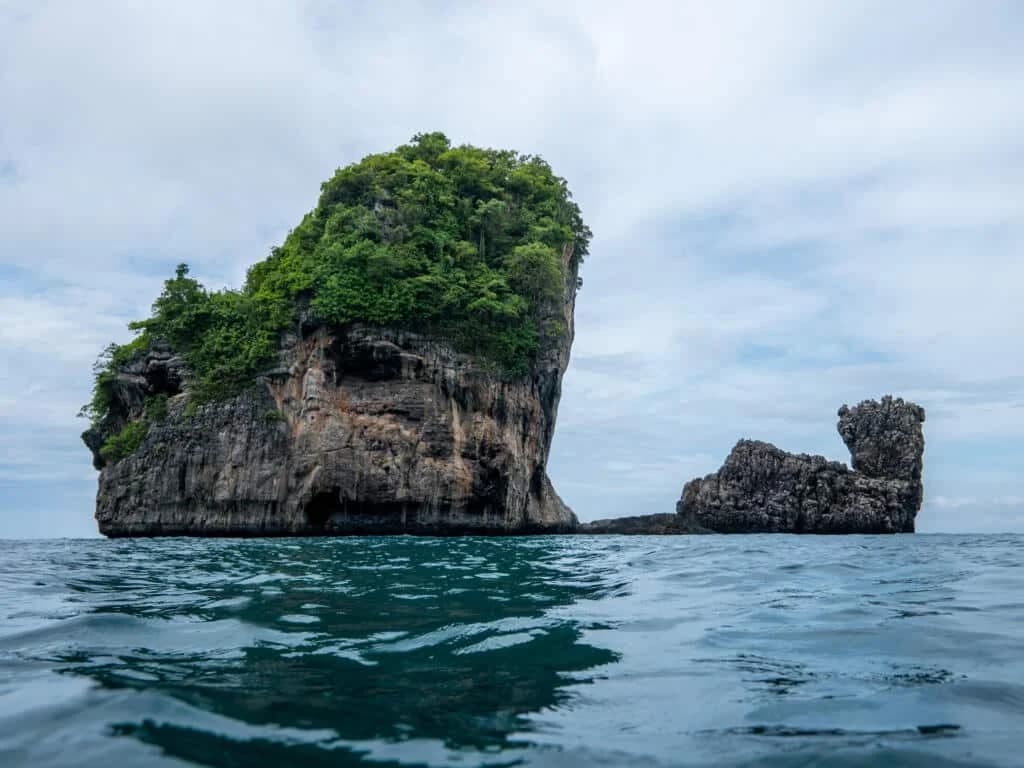
Koh Bida Nai and Koh Bida Nok are two small limestone islands a short way south of Phi Phi Leh, the island that holds Maya Bay and Pileh Lagoon. Both sit inside the national park.
On 14 March 2026 a ranger patrol from the park's Maya Bay protection unit spotted a whale shark close to the two islands. It was estimated at 3 to 5 metres long, which is a young one by whale-shark standards; adults can grow well past 10 metres. The park passed the news to boat operators and visitors in the area and gave three simple instructions: keep a safe distance, avoid noise, and don't try to interact with the animal.
The park described it as a rare sighting and a sign that the marine ecosystem is in better shape. Within the same week, a pod of more than 120 Indo-Pacific bottlenose dolphins was reported near Koh Tachai, further north. Visitor caps, seasonal closures and tighter boat rules in the parks are part of the reason sightings like these are being reported again. They are good news, but they are still the exception, not the rule.
When Whale Sharks Turn Up in the Andaman Sea
Whale sharks follow food. They feed on plankton, fish eggs and small fish, so they appear where currents push nutrient-rich water up from deeper sea.
In the Andaman Sea, most sightings are reported between about
February and April, with some into May. The busiest spots tend to be offshore pinnacles in open water, well away from the islands that most day trips from Phuket visit. Around Phi Phi, Phang Nga Bay and Phuket's nearer islands, a whale shark is a once-in-a-while visitor.
A few things are worth knowing:
- There is no reliable spot. Even in the best months, divers at well-known sites can go weeks without one
- They come to the surface. Whale sharks often feed near the top, which is why boat crews and snorkellers sometimes see them before divers do
- One sighting doesn't mean more tomorrow. A whale shark can be gone from an area within hours
So if a whale shark is the reason for your trip, plan a different kind of holiday. If it happens on a Phi Phi day, enjoy it as the bonus it is.
Whale Shark or Reef Shark? Know What You're Looking At
People often mix these up, especially in Phi Phi, where small sharks are part of the day out on some tours.
|
Whale shark |
Blacktip reef shark |
| Size |
Usually 4 to 12 metres; young ones from about 3 metres |
Usually around 1 to 1.5 metres |
| Look |
Grey-blue back covered in white spots and pale stripes, very wide flat mouth |
Slim and grey, with a clear black tip on the fins |
| Where you'll see it |
Open water, now and then, near the surface |
Shallow sandy water and reef edges around Phi Phi, fairly reliably in the dry season |
| What it eats |
Plankton and small fish, filtered through its mouth |
Small fish |
| Risk to you |
None if you follow the rules |
Shy. Keep your hands to yourself and they'll keep their distance |
If you want to see sharks at Phi Phi, the blacktips are the realistic hope. Our
Phi Phi Sunset & Shark Tour runs November to April and includes time in the water watching for blacktip reef sharks. A whale shark is never part of the plan on that trip, or any other.
Thailand's Rules: Why You Keep Your Distance
The whale shark is listed as endangered on the IUCN Red List. Worldwide numbers have more than halved over the last 75 years, mostly through fishing and boat strikes.
In Thailand it is a "reserved" wild animal under the Wild Animal Preservation and Protection Act. It was raised to that status in 2019, alongside Bryde's whale, Omura's whale and the leatherback turtle. Inside a national park, the park's own rules also apply: no touching, feeding, chasing or disturbing any wildlife. Divers who have grabbed or touched whale sharks in Thai waters have been tracked down and fined by the Department of National Parks.
The rules are simple, and they protect you as well as the animal. A whale shark is calm, but it is big, and its tail moves a lot of water.

How to Behave If You See a Whale Shark
On the boat
- Tell the crew quietly. Point, don't shout. Shouting and a crowd at the rail can push it back down
- Let the boat slow down and hold back. Boats should never chase, circle or cut across a whale shark's path, or try to box it in
- Stay seated if you're asked. Everyone moving to one side at once isn't safe on a speedboat
- Photos are fine, flash is not. Turn the flash off and enjoy watching it, rather than only filming it
In the water
- Only go in if the crew says it's safe. If it is, slide in quietly. No jumping or splashing
- Keep your distance. A commonly used international guide is at least 3 metres from the head and body and 4 metres from the tail
- Never touch, ride or grab it. Touching can damage the protective layer on its skin, and in a Thai national park it's against the law
- Don't swim in front of it or block its way. Stay to the side and let it choose where it goes
- Don't chase it. If it moves off, let it go. You won't keep up, and you shouldn't try
- Wear a mineral sunscreen. The same marine parks ban several sunscreen chemicals; our guide to reef-safe sunscreen and Thailand's marine park rules explains what to pack
What Our Crew Does If One Is Spotted
We run our Phi Phi and Phang Nga Bay days as small-group speedboat trips from Boat Lagoon Marina, with a maximum of 18 adults on each join-in boat. A whale shark is not on any of our itineraries, and we never chase one.
If our crew spots one on a Phi Phi day, the national park's guidance is what we follow: the boat slows down and keeps its distance, nobody chases it, and our guides make sure guests stay calm and quiet. Whether anyone gets in the water is the crew's call on the day, based on where the animal is, how close other boats are and the sea conditions. Before every trip we check the tides, swell and weather, and that safety call doesn't change because something exciting has turned up.
Our guides speak English and Thai. If you see something in the water and aren't sure what it is, ask. Most of the time it's a blacktip, a turtle or a shoal of fish. Now and then, it's something much bigger.
A Lucky Day, Not a Promise
The whale shark near Koh Bida in March 2026 was a good sign for the park and a lucky morning for the rangers who found it. It might happen again next season, or not for years. Either way, the bay doesn't owe anyone a sighting.
What every visitor can do is make sure the next whale shark finds the water just as quiet as this one did.
Two Sea Tour departs from 23 Boat Lagoon Marina, Soho Pool Club, Moo 2, Ko Kaeo, Ampur Mueang, Phuket 83000, Thailand. We're open 7 days a week, 05:00 to 20:00. Call or WhatsApp +66 81 787 7702, or email
booking@twoseatour.com.
Sources: the 14 March 2026 sighting was reported by the
Bangkok Post and
Théo Courant (18 March 2026). The 2019 reserved-animal listing was reported by
Open Development Thailand.